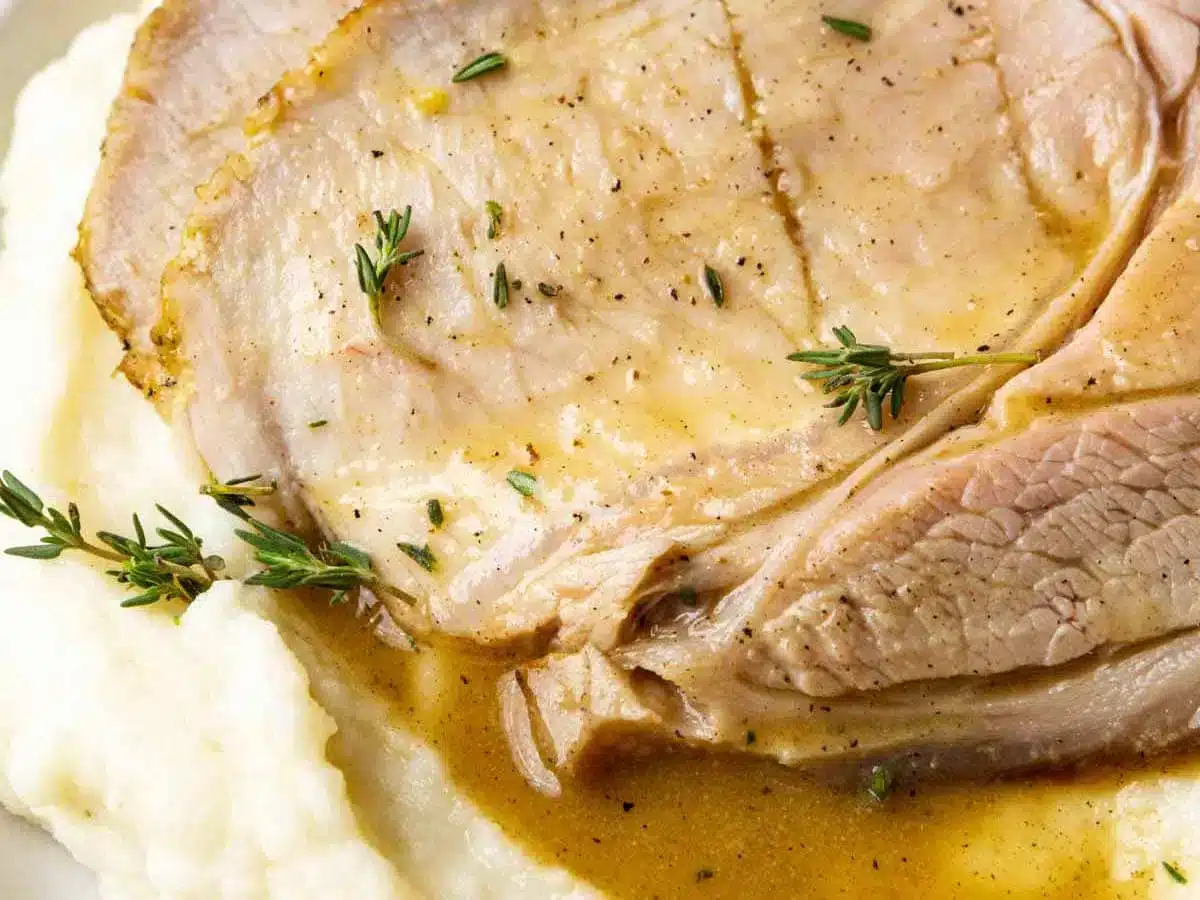

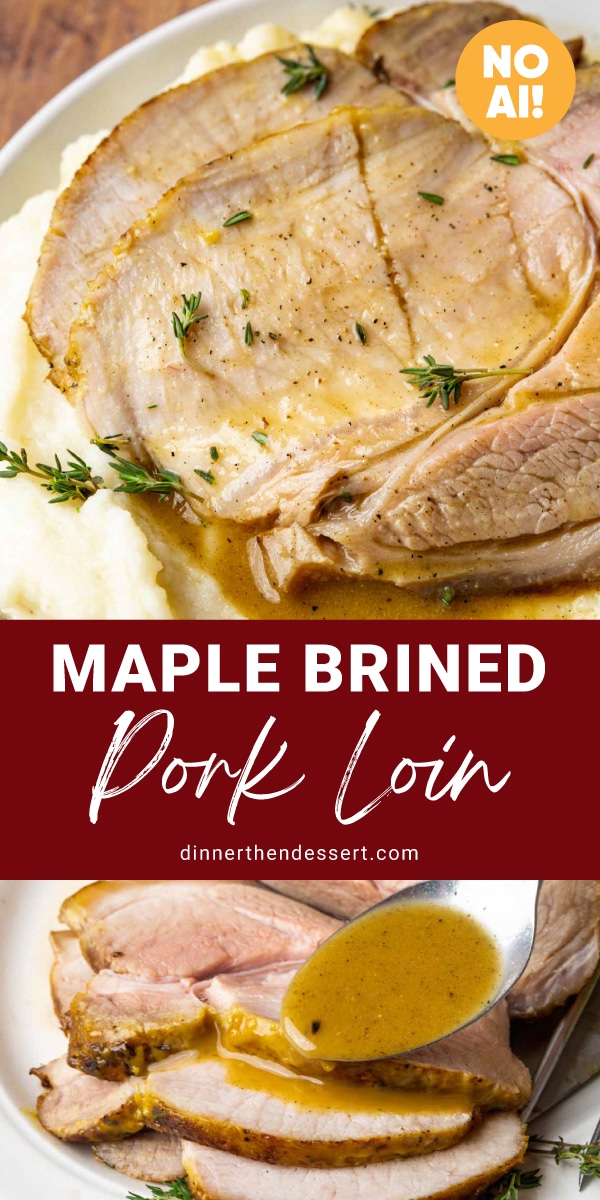
Maple Brined Pork Loin is an easy, flavorful roast that turns wonderfully tender and finishes with a bright, glossy touch!
This Pork Loin recipe makes an incredible Holiday Dinner Recipe that the whole family is sure to love. It’s just as juicy and flavorful as our Ultimate Garlic Pork Loin and Herb Crusted Pork Loin, but using the maple syrup brine adds a lovely sweet and smoky taste that goes great with Pork.

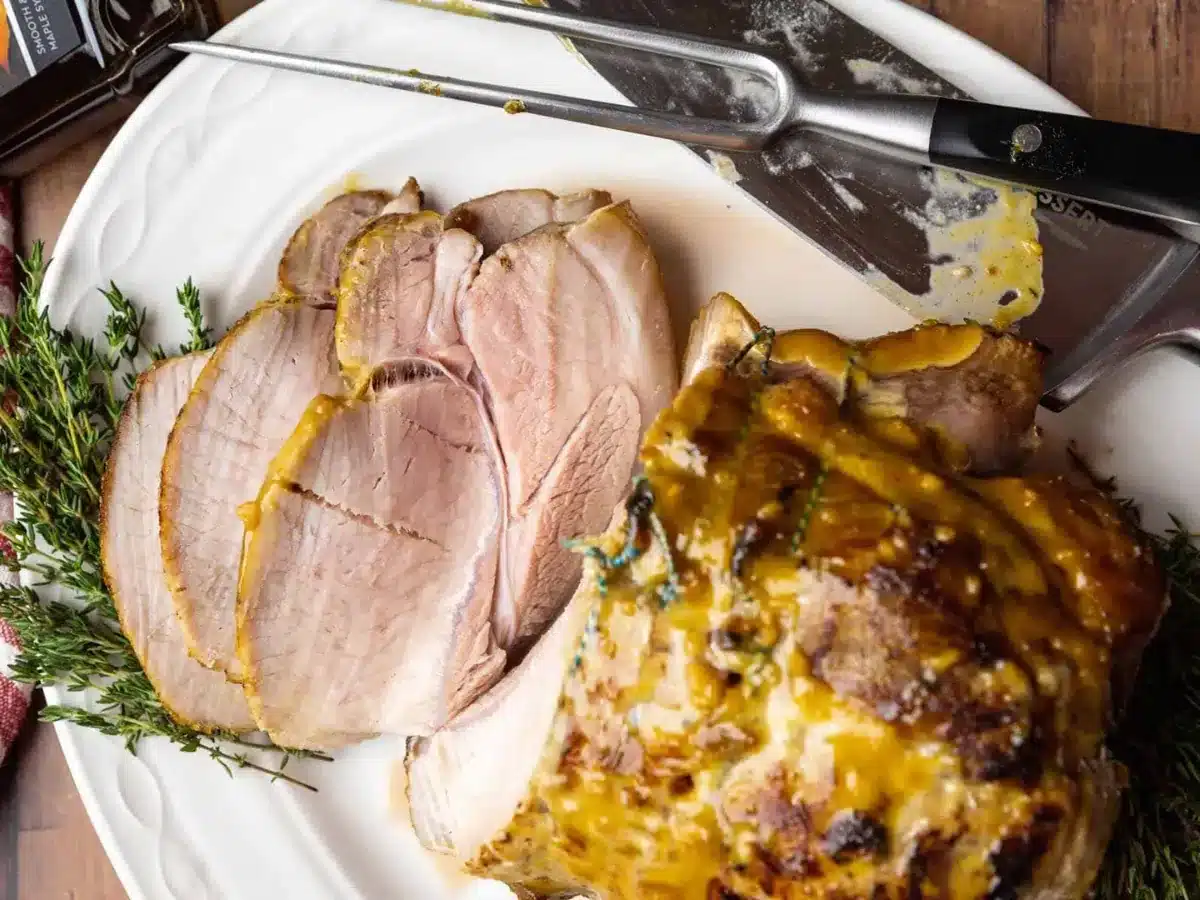
Why You’ll Love This Pork?
- This pork is packed with flavor, both sweet and savory.
- This loin sits in a brine overnight so the meal is easily prepped ahead.
Sabrina’s Maple Brined Pork Loin Recipe
Maple Brined Pork Loin is super easy to make in the overnight marinade. Using maple brine is a delicious idea that flavors the meat and tenderizes it to the center. The recipe also takes you through making a simple maple glaze and creamy gravy for an amazing quality dinner that’s absolutely packed with flavor. Guests will love this pork roast for the holidays when maple is a typical flavor in desserts, but not always expected in the main course.
Recipe Card



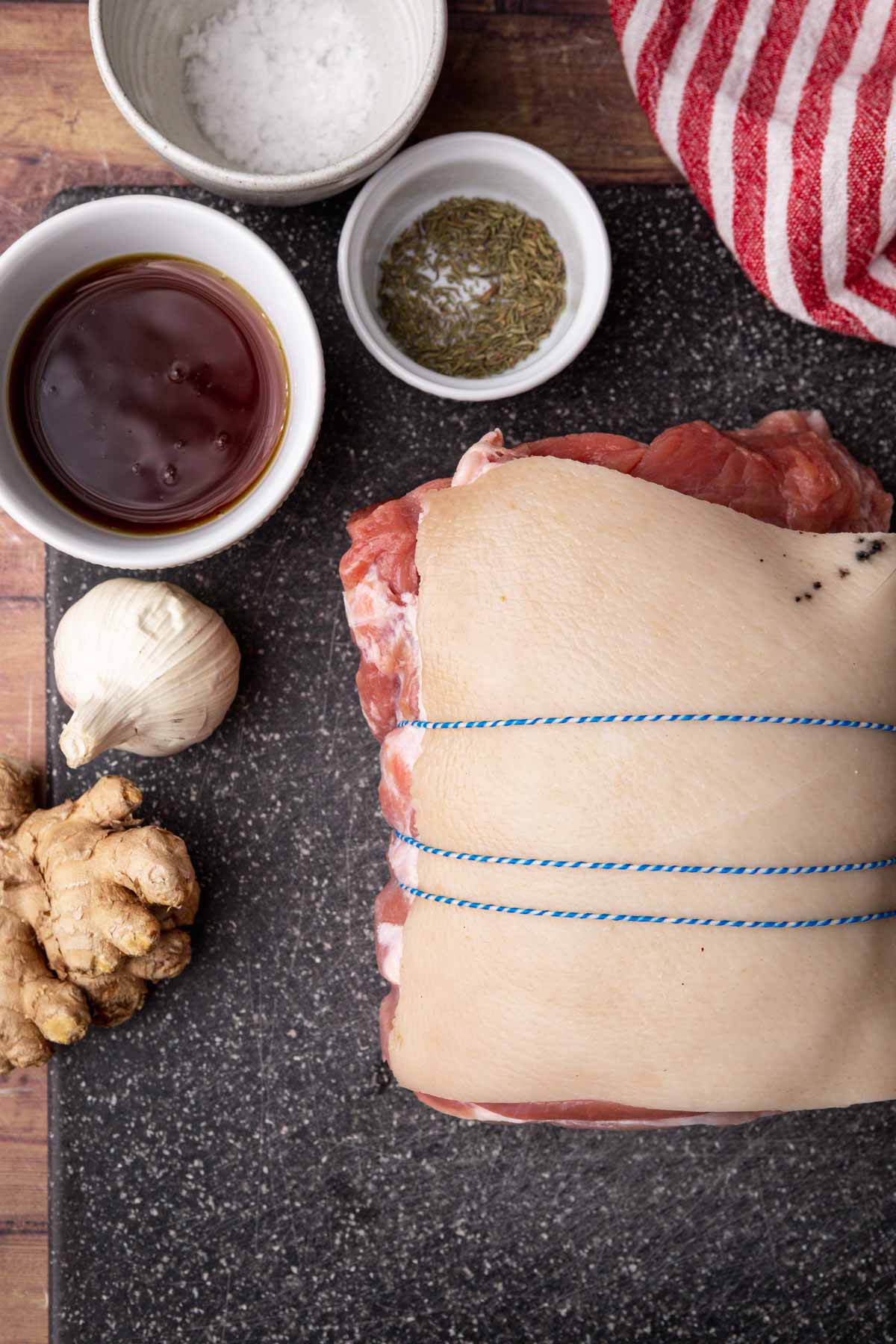
Ingredients
Brine:
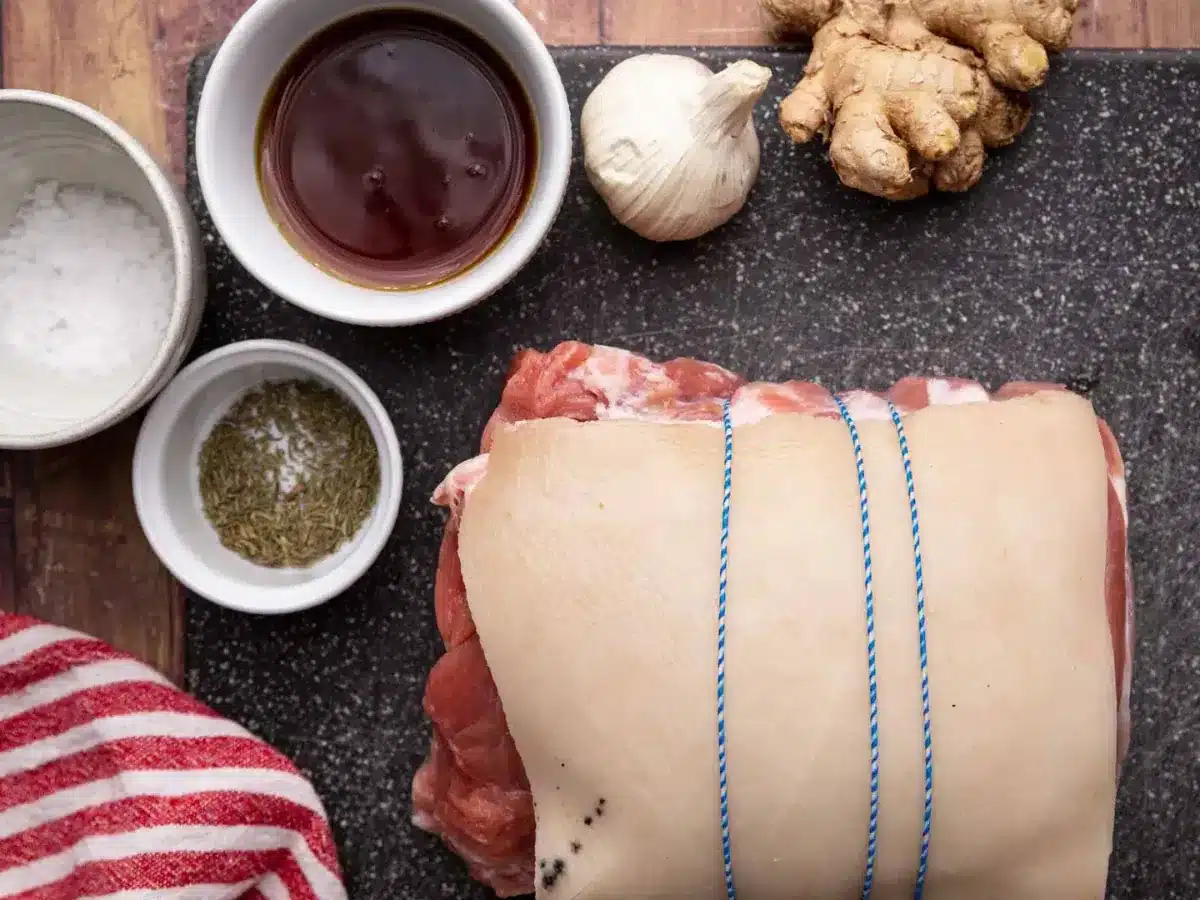
- 4 cups cold water
- 1/4 cup kosher salt
- 1/3 cup maple syrup
- 3 cloves garlic , roughly chopped
- 2 knobs fresh ginger , roughly chopped
- 1 teaspoons dried thyme
- 1 teaspoon coarse ground black pepper
- 1/2 teaspoon red pepper flakes
- 1 pork loin , roast, boneless, about 3 pounds
To Cook:
- 1/2 teaspoon kosher salt
- 1/4 teaspoon coarse ground black pepper
- 2 tablespoons vegetable oil
- 2 tablespoons maple syrup
- 2 tablespoons Dijon mustard
- 1 clove garlic , finely minced
- 1 cup white wine
- 1 teaspoon cornstarch
- 1 tablespoon water
Instructions
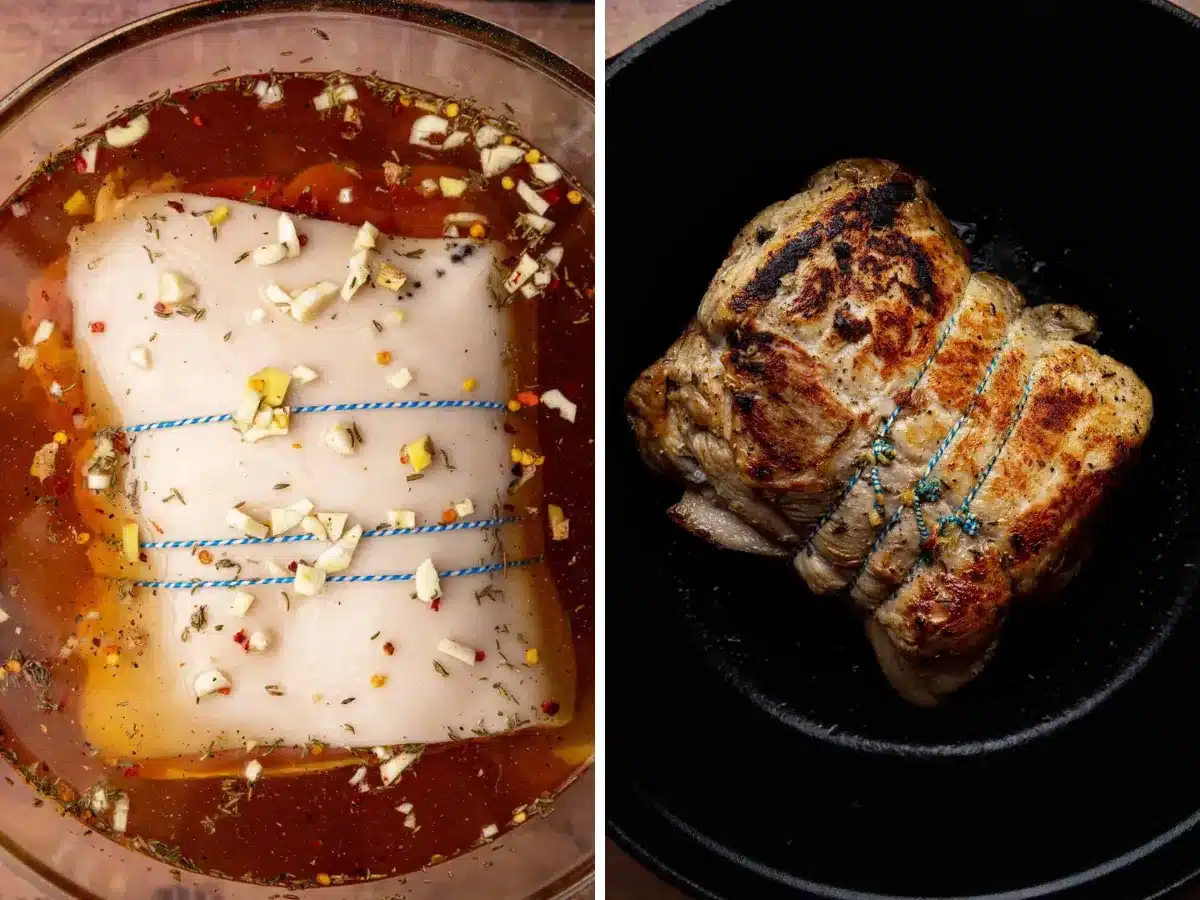
- In a large pot or large brining bag add the water, salt, maple syrup, garlic, ginger, thyme black pepper and pork loin roast.
- Refrigerate for 12 hours minimum, 24 hours is best.
- Preheat oven to 325 degrees.
- Remove the pork from the brine, dry well with paper towels.
- Season pork with salt and pepper.
- To a large Dutch oven or large oven safe skillet add the oil on high heat.
- Sear the pork on all sides.
- Put in the oven and cook for 45 minutes.
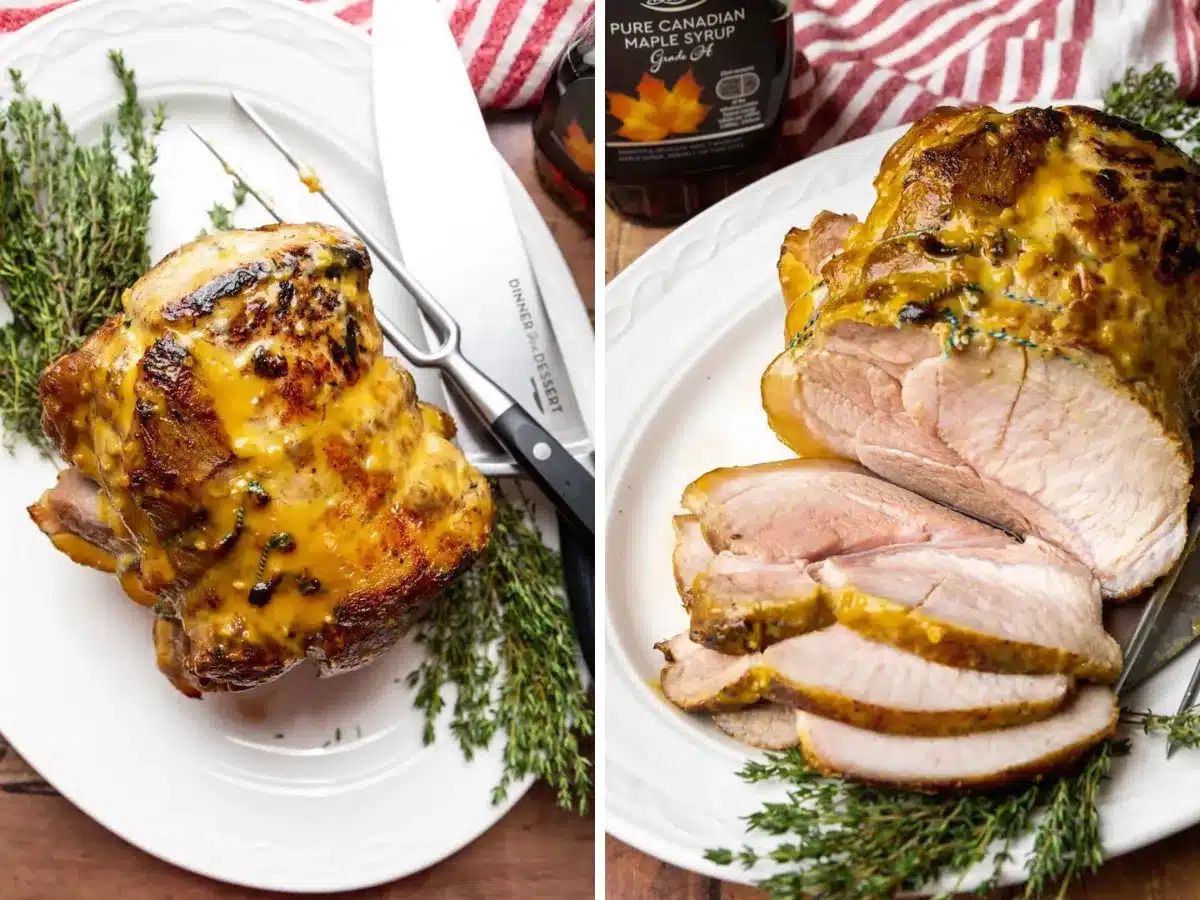
- Mix the maple syrup, Dijon mustard and garlic and spread evenly over the roast.
- Cook an additional 10 minutes.
- Remove when pork reaches 135-140 degrees, carryover cooking will take it to 145 degrees as needed.
- Remove the pork from the skillet and tent with foil to let it rest.
- To your skillet add the white wine.
- With a wooden or silicone spatula scrape up the pan drippings and stir well.
- Cook for 2 minutes, then add in the cornstarch mixed with the water.
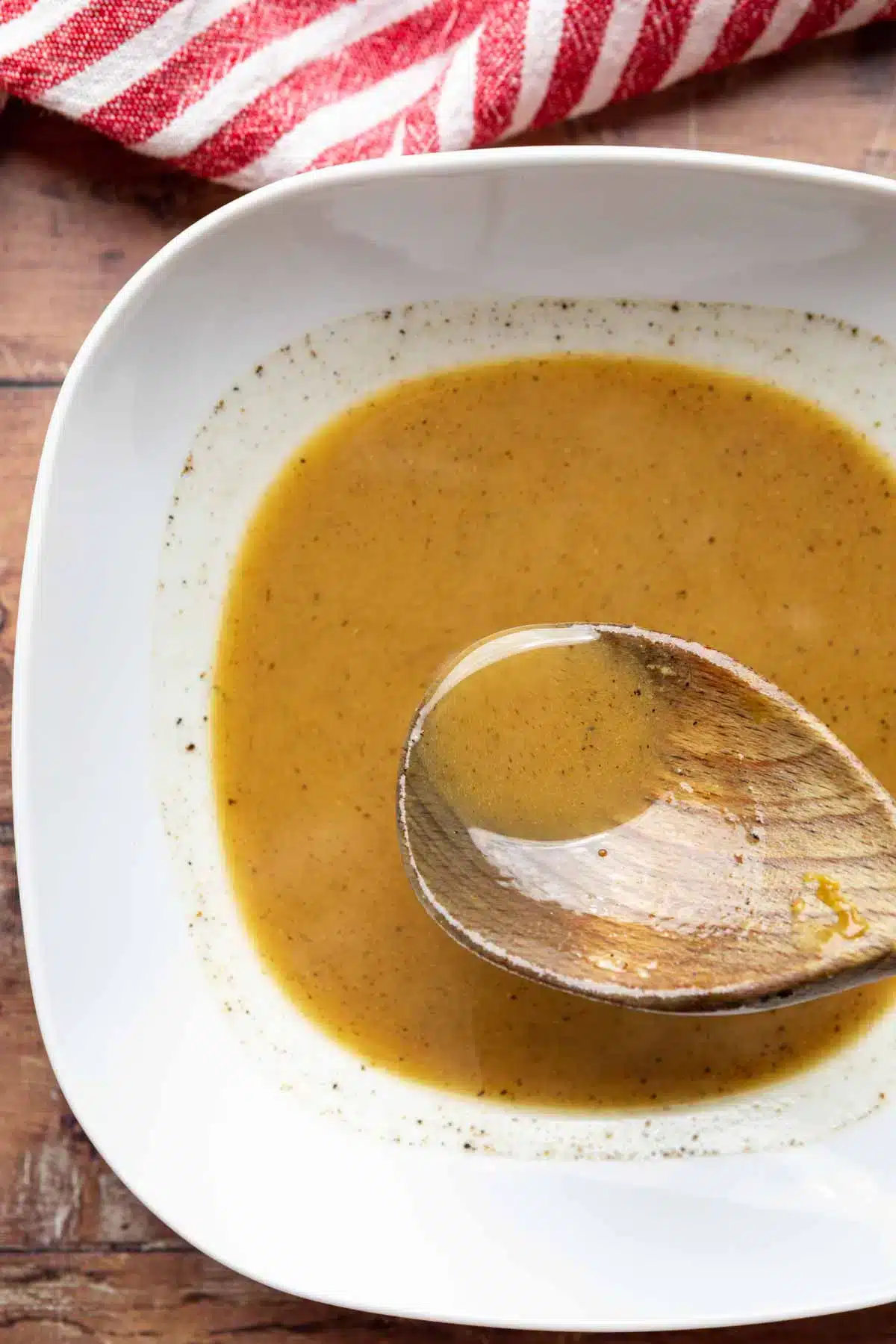
- Cook, stirring, until thickened into a smooth gravy.
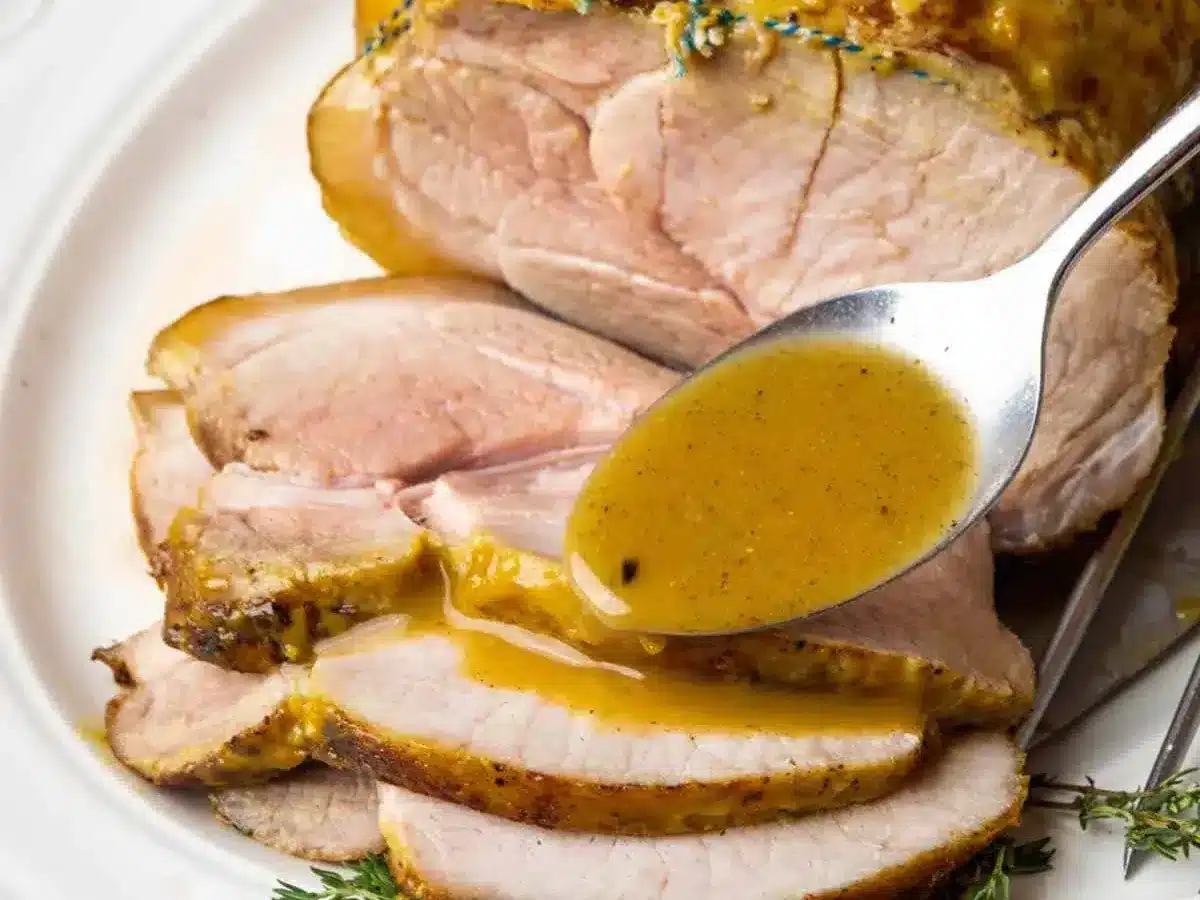
- Slice the pork roast and top with gravy.
Nutrition

Want to save this recipe? Create a free account to easily save your favorite recipes
Chef’s Note
Brining pork is a great way to keep the meat moist. Because pork loin cooks relatively quickly, it can also dry out easily. Preparing the meat in brine infuses it with extra moisture and adds flavor. Brining the meat does make this recipe time-intensive, but the results are so worth it! Additionally, ensure not to overcook the pork loin to prevent it from drying out. Use a meat thermometer to monitor the internal temperature and remove it from the oven when it reaches 145 degrees, allowing it to rest before slicing.
Table of contents
About this Recipe
Brining meat is an excellent method for keeping it tender throughout the cooking time. The maple brine on this pork roast not only keeps the meat tender but also gives it a complex flavor and incredible taste. Maple syrup makes the meat rich, sweet, comforting, and slightly smoky. Other ingredients like garlic and mustard balance that sweet flavor out for a classic fall flavor combo.
Ingredients
Brine Ingredients
- Cold Water: About a quart of cold water is used as the base for the brine, helping to infuse the pork loin with flavor while keeping it moist during the cooking process.
- Kosher Salt: Kosher salt is used to season the brine, helping to enhance the flavor of the pork loin while also aiding in the brining process. If unavailable, you can use sea salt, but adjust the quantity slightly as kosher salt grains are larger.
- Maple Syrup: Maple syrup adds a natural sweetness to the brine. It also helps to caramelize the exterior during cooking, creating a flavorful crust.
- Garlic: Roughly chopped garlic adds aromatic flavor to the brine. Fresh garlic is preferred for its robust flavor, but garlic powder can be used as a substitute (¼ teaspoon per clove).
- Fresh Ginger Roughly chopped fresh ginger adds a subtle warmth and complexity to the brine. If fresh ginger is unavailable, you can use ground ginger as a substitute (¼ teaspoon per knob).
- Dried Thyme: Dried thyme contributes earthy and floral notes to the brine.
- Coarse Ground Black Pepper: Coarse ground black pepper provides a bold and spicy flavor to the brine.
- Red Pepper Flakes: Red pepper flakes add a subtle heat to the brine, providing a gentle kick of spiciness to the pork loin. Adjust the quantity according to your preferred level of heat, or omit if sensitive to spice.
- Pork Loin Roast: For this recipe, you’ll want to pick up a 3-pound boneless pork tenderloin roast. Pork loin can dry out quite fast, but preparing it in a brine and adding glaze as you go ensures it stays juicy and turns out perfectly flavored.
Cooking Ingredients
- Kosher Salt: Additional kosher salt is used to season the surface of the pork loin before cooking.
- Coarse Ground Black Pepper: Additional coarse ground black pepper is used to season the surface of the pork loin.
- Vegetable Oil: Vegetable oil is used for searing the pork loin, helping to achieve a golden-brown crust on the exterior while locking in moisture. You can use olive oil.
- Maple Syrup: Maple syrup is used in the glaze to add sweetness and a glossy finish to the cooked pork loin.
- Dijon Mustard: Dijon mustard adds tanginess and depth of flavor to the glaze. Whole-grain mustard or honey mustard can be used as substitutes.
- Garlic: Finely minced garlic adds pungent flavor to the glaze. Fresh garlic is preferred for its robust taste, but garlic powder can be used as a substitute (¼ teaspoon per clove).
- White Wine: White wine deglazes the skillet. Choose a dry white wine such as Chardonnay or Sauvignon Blanc for the best results. Chicken or vegetable broth can be used as a non-alcoholic substitute.
- Cornstarch: Cornstarch acts as a thickening agent for the gravy.
- Water: Water is used to dissolve the cornstarch before adding it to the skillet.
Kitchen Tools & Equipment
- Large Pot or Brining Bag: Brining bags offer convenience and ease of storage in the refrigerator. When using a pot, cover it with a lid or plastic wrap to prevent spills or contamination.
- Dutch Oven or Oven-Safe Skillet: Needed for searing and roasting the pork loin. Preheat before searing for a golden crust.
- Wooden or Silicone Spatula: Needed for deglazing the skillet. Gentle on cookware and effective at scraping up flavorful bits. Avoid using metal spatulas, as they can scratch and damage the skillet.
- Instant-Read Meat Thermometer: Important for checking the pork’s internal temperature. Insert into the thickest part, avoiding bones or fat. For pork, the safe minimum internal temperature is 145 degrees.
- Cutting Board and Sharp Knife: Necessary for slicing the pork loin. Choose a sturdy board and a sharp knife for clean cuts. Allow the roast to rest on the cutting board for a few minutes before slicing to retain its juices.
Can this be made ahead of time?
Yes, this pork can be made ahead of time by brining the pork and preparing the glaze in advance. After cooking, it can be refrigerated for up to 3 days. Reheat gently in the oven or microwave before serving to ensure it stays tender and flavorful.
Pairing Suggestions
Whether you’re serving this dish for Christmas, a family get-together, or a dinner party, you’re going to want fantastic side dishes. With this impressive entree, you need equally delicious food on the side. Try one of our classic sides like Creamy Mashed Potatoes and Brussels Sprouts Gratin. But you can also think outside the box with dishes like Sweet Potato Souffle, or Baked Mac and Cheese.
How to Store
- Store: Don’t leave pork at room temperature for more than 2 hours. You can cover leftover pork in plastic wrap or seal it in a plastic storage container. Then it can stay fresh in the fridge for 3-4 days.
- Reheat: For best results, reheat the pork in a regular oven or microwave. Place slices in an oven-safe dish, cover with foil, and warm in a preheated oven at 325 degrees until heated through. Alternatively, microwave on medium power in short intervals until warmed
- Freeze: The cooked pork loin can be frozen for up to 2 months. Allow it to cool completely, then wrap tightly in plastic wrap or aluminum foil, followed by a layer of freezer-safe wrap. Thaw overnight in the refrigerator before reheating.
Variations
- Maple-Brined Pork Chops: Try preparing pork chops in the same mixture if you want to make this recipe a little simpler, for more of a weeknight recipe. Then, instead of roasting, you can simply prepare the brined pork chops on the stovetop like my Grilled Pork Chops Recipe.
- Brown Sugar: If you prefer, you can use brown sugar instead of maple syrup. It will have a slightly different flavor than the maple syrup. The syrup is also sweeter than sugar, so if you substitute, you’ll need to use ⅓ more brown sugar than maple syrup to get the same level of sweetness.
- Seasonings: You can add different flavors to the brine or glaze depending on what seasonings you mix in. Try adding paprika, onion powder, cumin, and red pepper flakes, or even replacing the garlic cloves with garlic powder.
- Wine Substitutes: If you don’t want to cook with wine, there are a few easy substitutes that you can use for the gravy. White wine vinegar, apple cider vinegar, chicken stock, or vegetable stock are all good options.
Related Recipes
More Amazing Pork Roast Recipes

These photos were in a previous version of this post