
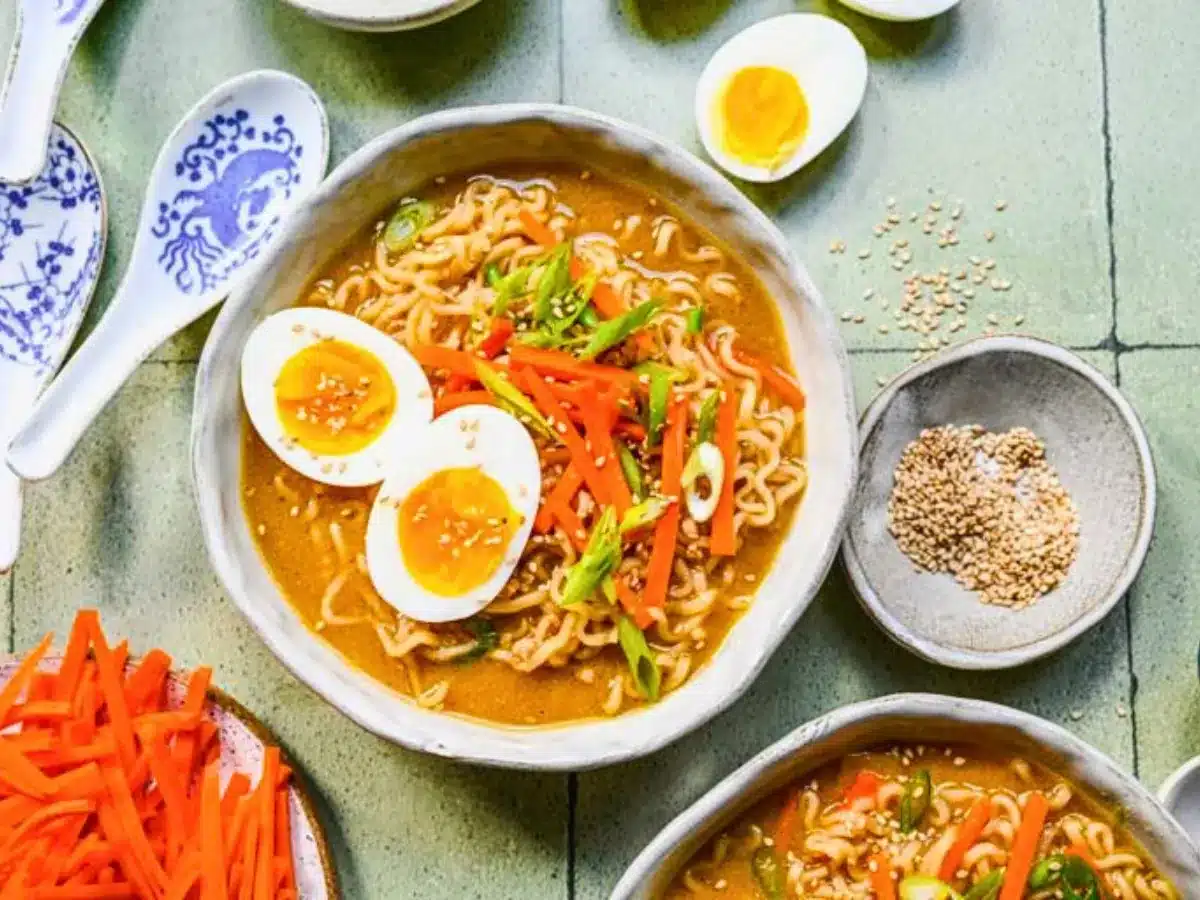
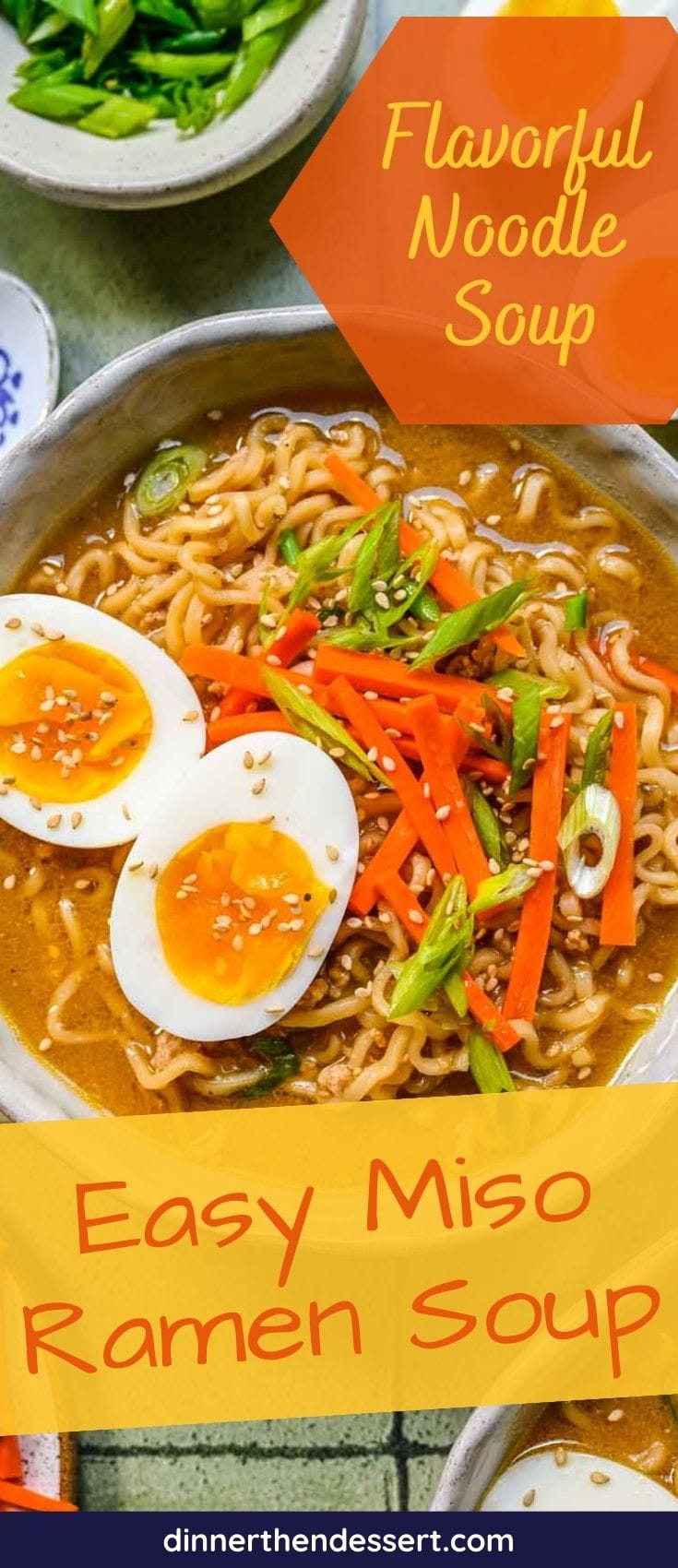
Miso Ramen is a cozy soup with layers of savory goodness. This homemade recipe comes together in 20 minutes which is faster than going out!
When you’re craving a comforting bowl of soup but want to deviate from the standard Chicken Noodle, try my Asian Potsticker Soup or a flavorful Spicy Ramen. There are so many delicious Soup Recipes to warm you up and satisfy your noodle cravings!

Why You’ll Love This Soup?
- The miso broth is packed with delicious umami flavor.
- It comes together in only 20 minutes in the comfort of your own home.
Sabrina’s Miso Ramen Recipe
Ramen is a beloved Japanese noodle soup that’s not only a comforting and satisfying meal but also surprisingly easy to make in your own kitchen. With a few key ingredients and about 15 minutes, you can make a flavorful Miso Ramen. This homemade bowl of ramen that is just as tasty as your favorite ramen shop!
Recipe Card


Ingredients
- 1 tablespoon sesame oil
- 1/2 pound ground chicken
- 4 cups chicken broth
- 2 tablespoons hoisin sauce
- 1/4 cup white miso paste
- 2 tablespoons low sodium soy sauce
- 1 tablespoon ginger , finely minced
- 3 cloves garlic , finely minced
- 2 packages ramen
- 4 ounces bamboo shoots
- 2 large eggs , soft boiled
- 1 tablespoons sesame seeds
- 1/4 cup green onions , thinly sliced
- 2 carrots , julienned
Instructions
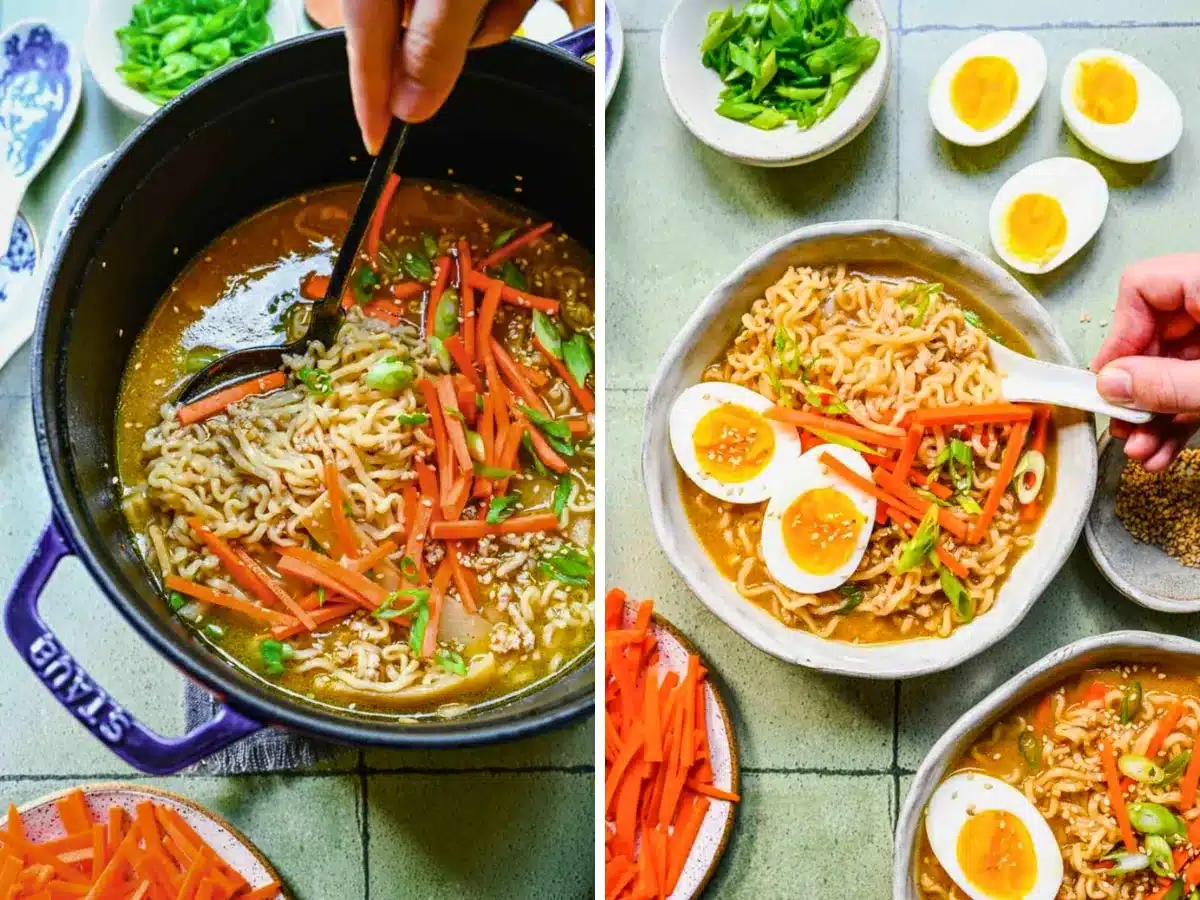
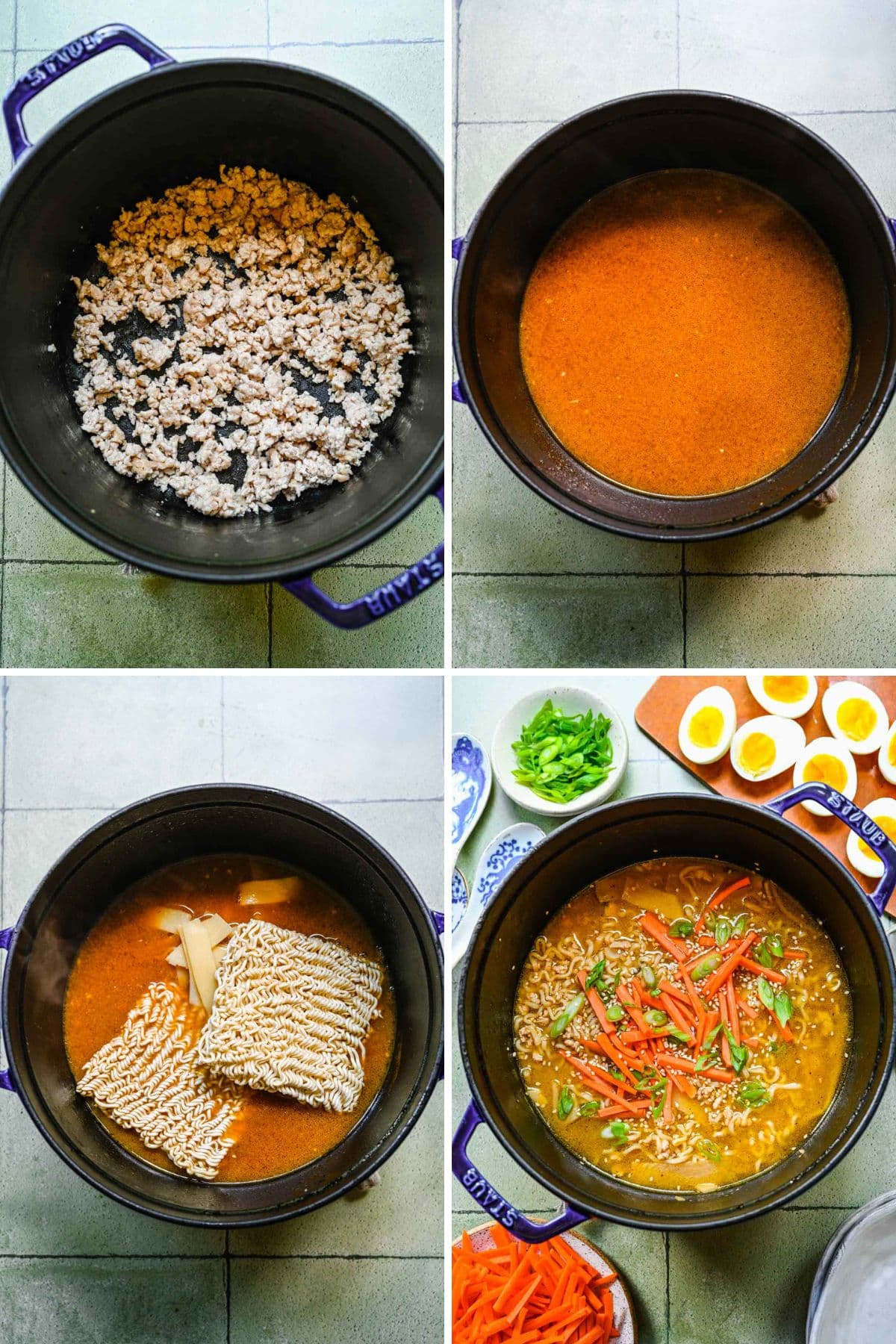
- Add sesame oil to a large pot on medium heat.
- Add ground chicken, breaking it apart as it cooks until fully cooked and broken into crumbles.
- Add the chicken broth, hoisin sauce, white miso paste, soy sauce, ginger and garlic.
- Bring to a simmer.
- Add in the ramen noodles (discard the packets) and bamboo shoots.
- Boil for 4-5 minutes.
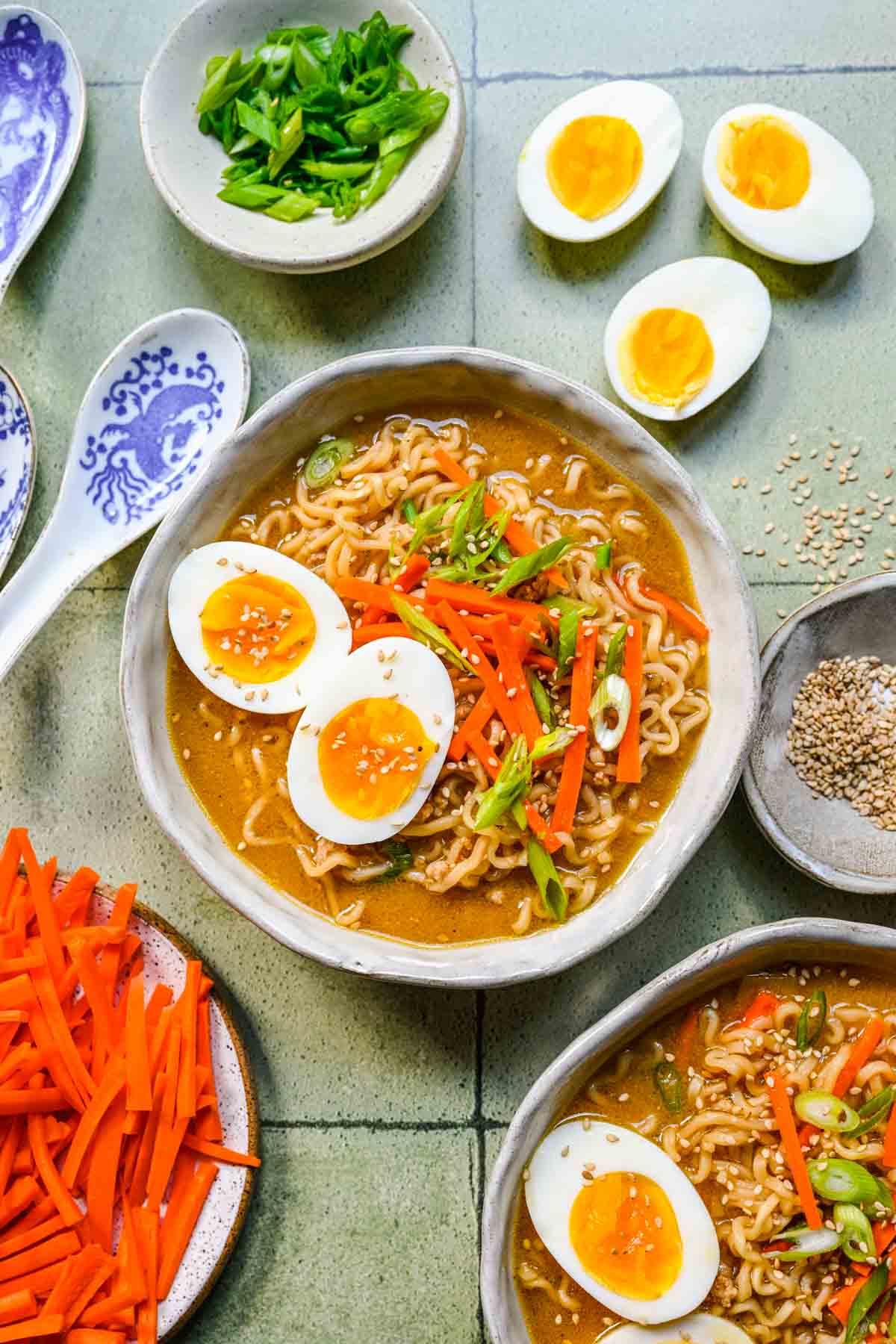
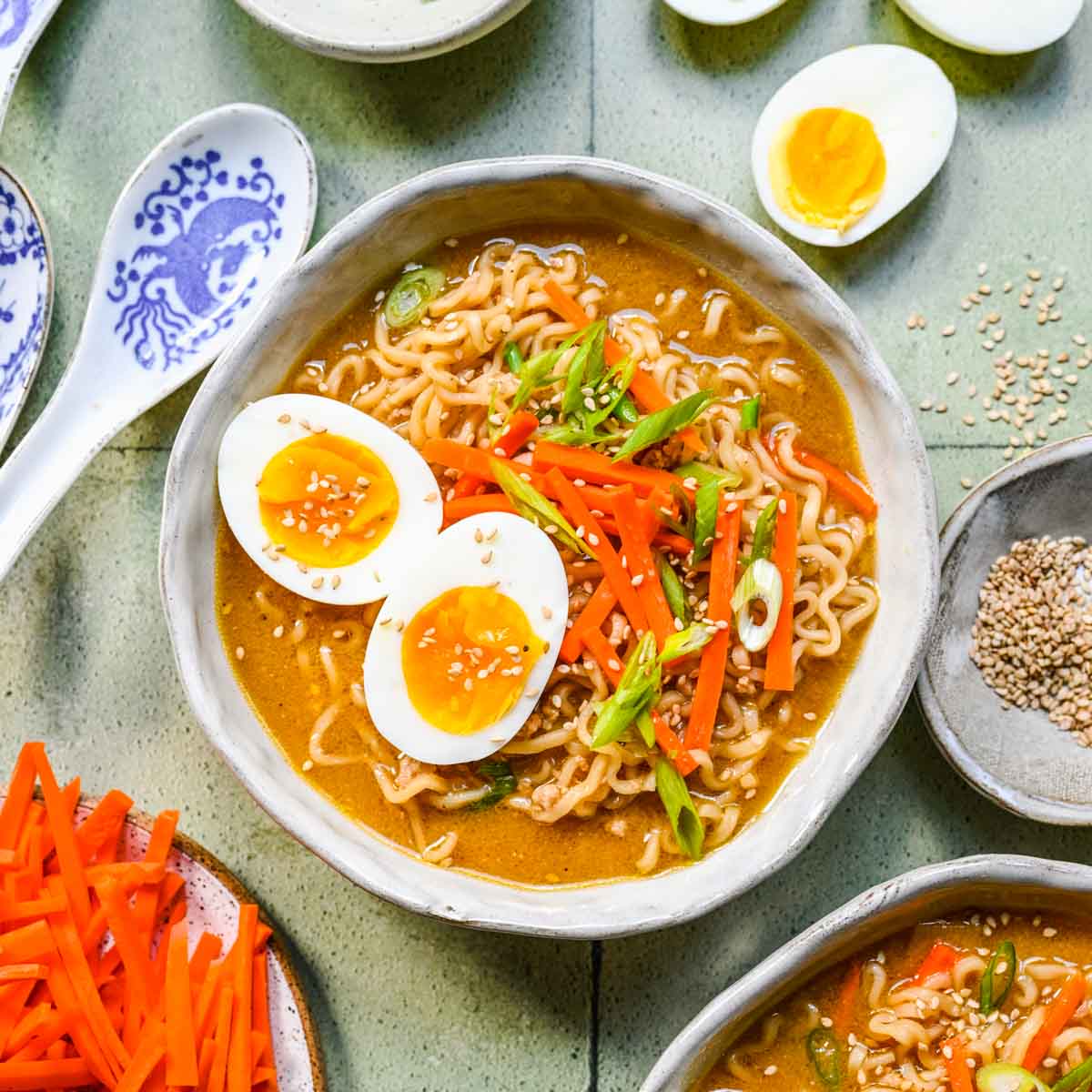
- Serve in a bowl.
- Cut the soft boiled eggs in half and place cut side up in the soup.
- Top with sesame seeds, green onions and carrots.
Nutrition

Want to save this recipe? Create a free account to easily save your favorite recipes
Note from Sabrina
When it comes to choosing the best miso paste for ramen soup, it largely depends on personal preference. However, I like white miso paste because its mild and has a slightly sweet flavor. Other miso varieties include red miso paste, or miso pastes with special ingredients like dashi, koji or mugi miso.u003cbru003e
Table of contents
About this Recipe
While some traditional ramen recipes may call for hard-to-find or specialized ingredients, this soup recipe keeps it approachable. The key ingredients, such as white miso paste, ramen noodles, chicken broth, and common pantry items like ginger and garlic, are readily available in most major grocery stores. This means you won’t have to go on a wild ingredient hunt or make a special trip to an Asian grocery store.
What is Miso Ramen?
Miso ramen is a type of Japanese noodle soup with a base broth made from fermented soybean paste called miso. The miso broth is rich and often made with chicken or pork to add a more savory flavor and heartiness. The hot broth is served with chewy cooked ramen noodles and your choice of various toppings and mix-ins. You’ll often find miso ramen with veggies like seaweed, bok choy, or bamboo shoots added. Popular toppings range from simple like green onions, bamboo shoots, and soft-boiled eggs to special Asian ingredients like fish cakes, nori, and black garlic.
Ingredients
- Miso Paste: Miso paste is a fermented soybean paste that adds a rich and complex umami flavor to the broth. In this recipe, white miso paste is used for its mild and slightly sweet taste, which perfectly complements the other ingredients and still has a distinctive flavor.
- Ramen Noodles: You don’t need to get any fancy expensive noodles, the cheap instant noodles are perfect. Make sure to get the ones with the seasonings in separate packets, like the square package noodles not the cup of noodles.
- Sesame Oil: Sesame oil is used for browning the chicken and enhancing its initial flavor. You only want to use a small amount of sesame oil because it has a very strong taste.
- Chicken: You add both ground chicken and chicken broth to build the rich, savory flavor profile. The chicken meat also makes this a heartier dish while the broth adds way more depth than plain hot water for the lquid.
- Flavorings: Hoisin sauce adds a touch of sweetness and depth to the broth while soy sauce adds some salty, umami flavor. Ginger adds a subtle heat and a fresh, zesty note, while garlic infuses the broth with its distinctive pungency. Finally some pickled bamboo shoots add a tangy crunch.
- Soft-Boiled Eggs: Soft-boiled eggs are a classic topping. The slightly cooked yolk adds a creamy texture and a velvety richness to the broth. Add whole raw eggs to simmering water and let them barely simmer (not boil) for 6-7 minutes.
- Toppings: This delicious soup is served with green onions, sesame seeds, and juilenned carrots for some freshness and crunch. You can also add popular optional toppings like cilantro, thinly sliced onions, fish cakes, lime wedges, or a couple drops of sesame oil.
Can this be made ahead of time?
While the broth and noodles can be prepared in advance, you don’t want to assemble the entire bowl until just before serving. This ensures that the noodles stay firm and the toppings stay fresh and vibrant. However, you can make a big batch of the miso chicken broth ahead of time and freeze it for up to 2 months. When you are ready to have ramen, let it thaw overnight in the refrigerator. Bring it to a boil, then cook the noodles and bamboo shoots then add the toppings as usual.
Serving Ideas
A big bowl of Miso Ramen wouldn’t be complete without a bunch of delicious classic toppings like soft-boiled eggs, green onions, and sesame seeds. You’ll often find ramen with veggies like seaweed, bok choy, or bamboo shoots added. And again, you can pick them up in one trip to any major grocery store. This recipe is made with ground chicken so it can be served as a complete meal on its own. If you are feeling really adventurous, why not make Dragon Rolls or California Rolls to recreate the Ramen Shop experience?
How to Store
- Store: It’s best to store the broth and cooked noodles separately so the noodles stay firm and don’t absorb all the liquid. Ramen will keep about 3-4 days in the fridge in an airtight container.
- Reheat: Gently warm the broth over low heat and have the noodles at room temperature while the broth is heating up. Once the broth is hot, stir in the noodles and then serve, letting the hot broth reheat the noodles.
- Freeze: It’s best to freeze the ramen broth by itself then make a fresh batch of noodles and toppings after you reheat it. Let the soup cool completely then freeze in an airtight container for up to 2 months. Thaw overnight before reheating on the stove.
Frequent Questions
Miso is a traditional Japanese ingredient made from fermented soybeans, salt, and a koji culture (a type of mold). It is a thick paste with a rich, savory flavor and a complex aroma. Miso is highly versatile and is used in various Japanese dishes, including soups, marinades, dressings, and glazes. Its unique fermentation process gives it a deep umami taste, adding depth and complexity to recipes.
Miso paste is widely available and can be found in most well-stocked grocery stores, particularly in the international or Asian food section. Additionally, you can also purchase miso paste from specialty Asian markets or online.
Variations
- Spicy: For a Spicy Miso Ramen, you can add some of your favorite hot sauce, or try spicy Asian ingredients like hot bean paste or spicy chili oil.
- Vegetables: You can add all kinds of veggies to this ramen recipe like bok choy, seaweed, leafy greens like kale or spinach, or bean sprouts. For a vegetarian version, swap vegetable broth for the chicken broth and skip the ground chicken.
- Garlic: While there is already fresh garlic in the broth, try using roasted garlic as well to deepen the flavor and make it extra garlicky. If you can find it, try black garlic, which is fermented garlic that has a sweet caramel taste with acidic and smoky notes.
- Toppings: Some other popular choices for Ramen toppings include sliced roasted pork (chashu), corn kernels, bean sprouts, mushrooms (such as shiitake or enoki), nori seaweed, and pickled vegetables. Feel free to mix and match to create your own favorite combination of toppings.
Related Recipes
More Delicious Asian Noodle Recipes

Photos used in previous version of post:







What a gorgeous and cozy recipe! I see that you can freeze the leftovers, which is great for meal prep. When reheating it from frozen, does the rice tend to break down too much into mush, or does the Jasmine rice hold its texture pretty well?
Thank you, and thanks for the praise! I see you’re mentioning rice instead of noodles, but no matter what carb you use, you’ll want to separate it from the broth before freezing. The texture of either rice or noodles will get mushy so I don’t recommend freezing them with the broth.